Tracking Progress and Staying Informed: Understanding the Master of the High Court Deceased Estates Process Mopeli & Co Attorneys
Tracking Progress and Staying Informed: Understanding the Master of the High Court Deceased Estates Process
When you are tasked with administering the deceased estate of a loved one, or if you are a beneficiary awaiting the distribution of assets, understanding the role of the Master of the High Court and how to track the progress of the estate is paramount. The Master's Office plays a crucial supervisory role in ensuring that deceased estates are administered in accordance with the law, protecting the interests of all parties involved.
At Mopeli & Co Attorneys, with our offices located in Gauteng and the Free State, we assist clients across South Africa in navigating the complexities of deceased estate administration. We understand that staying informed about the progress of the estate is vital for peace of mind. While direct tracking of deceased estates through the Master's Office may have limitations, this guide will shed light on the Master's role, how the process generally unfolds, and how Mopeli & Co Attorneys can help you stay informed. For our valued clients, we also offer a secure client portal on our website where you can conveniently log in to access updates and important documents related to your estate matter.
The Pivotal Role of the Master of the High Court in Deceased Estates:
The Master of the High Court is a government official responsible for overseeing the administration of deceased estates. Their key functions include:
Receiving and Registering Deceased Estates: The process begins with the formal reporting of the death to the Master's Office.
Appointing Executors: The Master grants legal authority to the appointed executor(s) by issuing Letters of Executorship (or Letters of Authority for smaller estates without a will).
Supervising the Executor's Actions: The Master ensures that the executor carries out their duties in accordance with the Administration of Estates Act and other relevant legislation. This includes reviewing key documents such as the Inventory and the Liquidation and Distribution Account.
Protecting the Interests of Minors and Incapacitated Individuals: The Master pays particular attention to safeguarding the inheritance rights of vulnerable beneficiaries.
Adjudicating Disputes: The Master can, in certain circumstances, mediate or provide guidance on disputes that may arise during the administration process.
Finalising Estates: Once the executor has fulfilled all their obligations and the Master is satisfied that the estate has been properly administered, the estate is formally finalised.
Essentially, the Master's Office acts as a regulatory body, ensuring transparency and accountability in the administration of deceased estates.

Why Tracking the Progress of a Deceased Estate is Important:
Staying informed about the progress of a deceased estate is crucial for several reasons:
Understanding Timelines: It helps beneficiaries get a general sense of when they might expect to receive their inheritance.
Identifying Potential Delays: Tracking can highlight any unforeseen issues or delays that may be holding up the process.
Ensuring Accountability: It allows beneficiaries to monitor whether the executor is fulfilling their duties diligently and in accordance with legal requirements.
Peace of Mind: Knowing the status of the estate can provide a degree of comfort during a difficult time.
How the Deceased Estate Process Generally Unfolds (Providing Context for Tracking):
To understand how to track progress, it's helpful to have a clear picture of the typical stages involved after the Letter of Executorship has been granted:
Asset Collection and Valuation: The executor will be actively identifying and valuing all the deceased's assets. This can take time depending on the complexity of the estate.
Debt Settlement: The executor will advertise for creditors and begin the process of settling any legitimate debts owed by the deceased. This phase has legally mandated timeframes.
Preparation of the Liquidation and Distribution Account (L&D Account): Once assets and liabilities are established, the executor will prepare a detailed L&D Account outlining how the estate will be distributed.
Advertising the L&D Account: The L&D Account must be advertised in the Government Gazette and a local newspaper for a specific period, allowing for objections.
Master's Office Scrutiny of the L&D Account: The Master's Office reviews the L&D Account to ensure it complies with legal requirements and protects the beneficiaries' interests. This review can sometimes take several weeks or months, depending on the Master's workload and any complexities in the account.
Distribution of Assets: Once the Master approves the L&D Account and any objections are resolved, the executor can proceed with distributing the assets to the beneficiaries.
Finalisation: After distribution is complete, the executor submits final documentation to the Master for the estate to be officially closed.
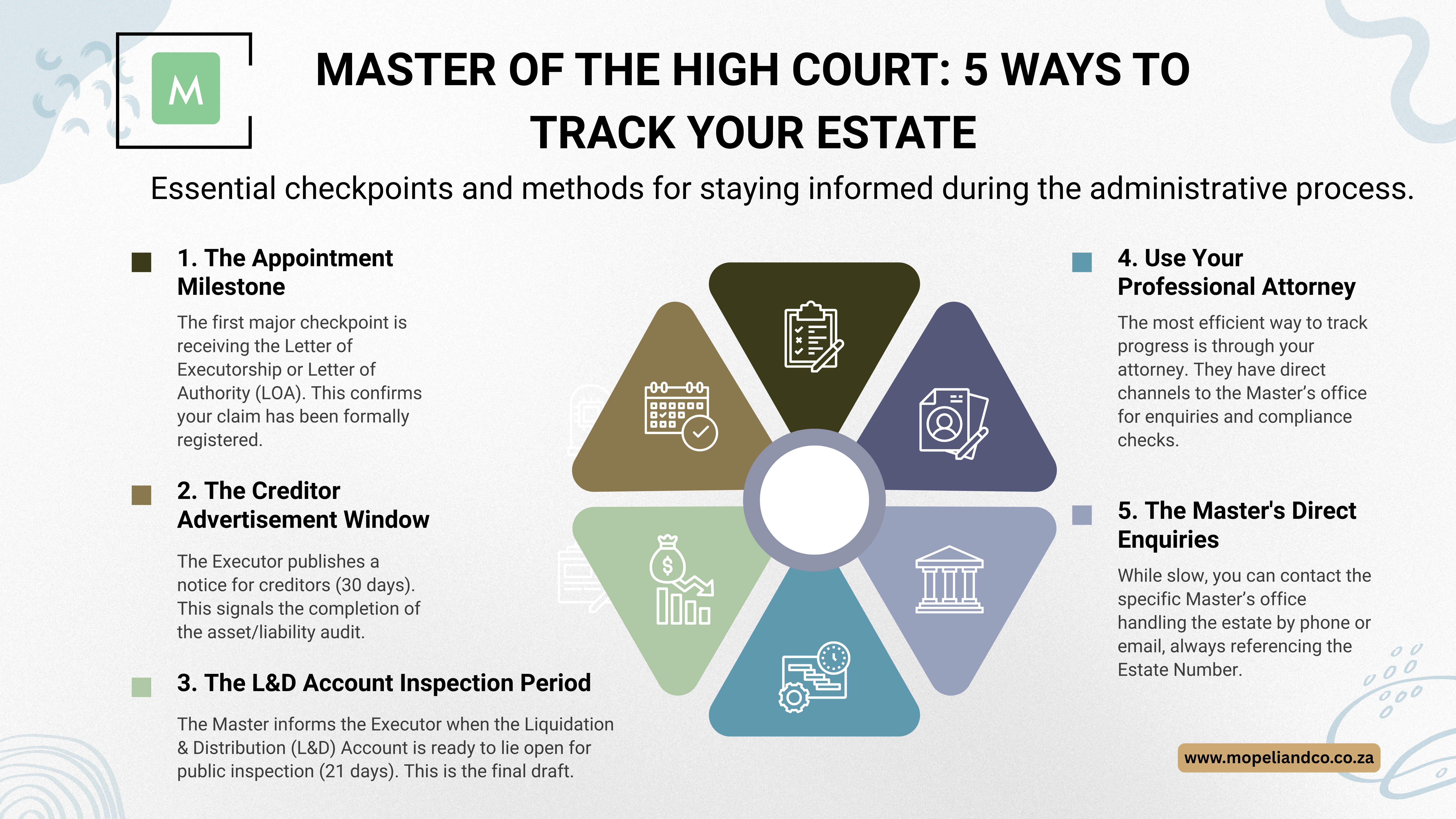
Practical Ways to Stay Informed About Your Deceased Estate:
While a centralised online tracking system for deceased estates accessible to the public is not consistently available across all Master's Offices in South Africa, there are several ways to stay informed:
Maintain Open Communication with the Executor: The executor has a legal duty to keep beneficiaries reasonably informed about the progress of the estate. Establish clear lines of communication and don't hesitate to ask for updates.
Regularly Engage with Your Attorney (if applicable): If you have appointed Mopeli & Co Attorneys to assist with the estate, we will act as your primary point of contact and will proactively provide you with updates on the progress of the administration. Our secure client portal provides a convenient platform for accessing this information and important documents.
Enquire Directly with the Master's Office (with caution): While you can technically contact the relevant Master's Office to enquire about the status of an estate, be prepared for potential delays in response due to their workload. You will typically need the deceased's full name and identity number. Having the estate number (once assigned) is also crucial. Contact details for the various Master's Offices can usually be found on the Department of Justice and Constitutional Development website.
Monitor Advertisements: Keep an eye out for notices in the Government Gazette and local newspapers regarding the advertising of the Liquidation and Distribution Account. This will indicate that the estate is nearing the distribution phase.
How Mopeli & Co Attorneys Simplify the Tracking Process for You:
At Mopeli & Co Attorneys, we understand the importance of transparency and keeping our clients informed. We streamline the process of tracking your deceased estate by:
Acting as Your Primary Liaison: We handle all necessary communication with the Master's Office and other relevant parties on your behalf, saving you time and potential frustration.
Providing Regular Updates: Our team will proactively keep you informed about the key milestones and progress of the estate administration.
Utilising Our Secure Client Portal: Our online portal offers a convenient and secure way for you to access updates, view important documents (such as the Letters of Executorship and the L&D Account once available), and track the overall progress of your case from anywhere, at any time.
Explaining Complex Procedures: We will break down the often-complex legal and administrative processes involved, ensuring you understand each stage and what to expect.
Addressing Your Concerns Promptly: If you have any questions or concerns about the progress of the estate, our team is readily available to provide clarification and support.
Staying Informed for Peace of Mind:
Navigating the administration of a deceased estate can be a lengthy process, and staying informed is key to managing expectations and ensuring accountability. While direct public tracking through the Master's Office may be limited, maintaining open communication with the executor and, crucially, engaging the services of experienced attorneys like Mopeli & Co Attorneys, can provide you with the information and peace of mind you need during this sensitive time.

If you require assistance with the administration of a deceased estate and want a dedicated legal team to keep you informed every step of the way, please contact Mopeli & Co Attorneys, serving clients across South Africa from our offices in Gauteng and the Free State.
Share your experiences or any questions you have about tracking the progress of a deceased estate in the comments section below.
For a confidential and free, no-obligation consultation to discuss your specific deceased estate needs and how Mopeli & Co Attorneys can help you stay informed, please click here or send us a WhatsApp on 082 071 3041. Existing clients can log in to our secure client portal on our website for updates and important documents related to their case. Let us provide you with the expert guidance and transparent communication you deserve.
