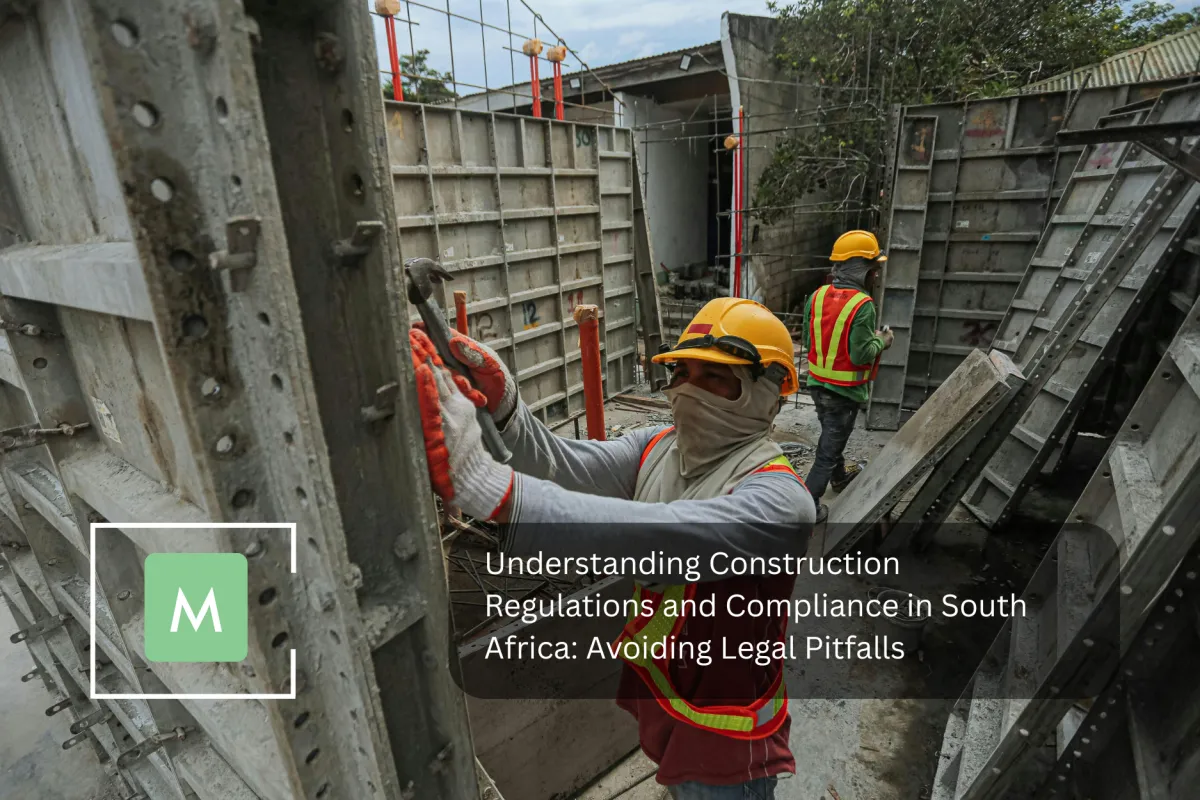
Understanding Construction Regulations and Compliance in South Africa: Avoiding Legal Pitfalls
Understanding Construction Regulations and Compliance in South Africa: Avoiding Legal Pitfalls
The South African construction industry operates within a complex web of regulations, standards, and legal requirements. Navigating this landscape can be challenging for even the most seasoned professionals. Non-compliance, however, can lead to significant legal and financial repercussions, including project delays, penalties, and even the suspension of operations. Whether you are a developer, contractor, subcontractor, or property owner undertaking construction work, a thorough understanding of these regulations is paramount to ensuring project success and avoiding costly legal pitfalls.
At Mopeli & Co Attorneys, with our offices strategically located in Gauteng and the Free State, we provide comprehensive legal guidance to clients across South Africa involved in the construction sector. We recognize the critical importance of regulatory compliance and are dedicated to helping individuals and businesses navigate this intricate area of law. This guide will explore some of the key construction regulations in South Africa and highlight the potential legal consequences of non-compliance. For our valued clients nationwide, we also offer a secure client portal on our website where you can conveniently log in to access updates and important documents related to their regulatory matters.

The Pillars of Construction Regulation in South Africa:
Several key pieces of legislation and regulatory frameworks govern the construction industry in South Africa. Understanding these foundational pillars is essential for ensuring compliance:
The National Building Regulations and Building Standards Act, 1977 (NBR): This Act forms the cornerstone of building control in South Africa. It sets out the requirements and standards for the design, construction, and alteration of buildings to ensure health, safety, and structural integrity. The NBR covers a wide range of aspects, including structural design, fire safety, plumbing, electrical installations, and energy efficiency. Municipalities are responsible for enforcing the NBR through the approval of building plans and inspections during construction.
The Occupational Health and Safety Act, 1993 (OHS Act): This Act aims to provide for the health and safety of persons at work and for the health and safety of persons in connection with the activities of persons at work. 1 The construction industry, with its inherent risks, is heavily regulated by the OHS Act and its specific Construction Regulations. These regulations place numerous obligations on employers, contractors, and other stakeholders to ensure a safe working environment, prevent accidents, and provide necessary safety equipment and training.
Local Municipal By-laws: In addition to national legislation, local municipalities often have their own by-laws that regulate various aspects of construction within their jurisdiction. These by-laws may cover issues such as zoning, land use, noise control, waste management, and specific building requirements that supplement the NBR.
Environmental Regulations: Construction activities can have significant environmental impacts. Various environmental regulations, including the National Environmental Management Act, 1998 (NEMA), and its associated regulations, govern aspects such as environmental impact assessments (EIAs), waste disposal, pollution control, and the protection of natural resources. Depending on the scale and nature of the project, environmental authorization may be required before construction can commence.
South African National Standards (SANS): While not strictly legislation, SANS are a set of standards developed by the South African Bureau of Standards (SABS) that provide technical specifications and guidelines for various aspects of construction materials, methods, and safety. Compliance with relevant SANS is often referenced in the NBR and other regulations and is considered a benchmark for quality and safety.
Key Areas of Regulatory Compliance in Construction:
Navigating the regulatory landscape requires attention to detail across various stages of a construction project:
Building Plan Approval: Before any construction work can begin, detailed building plans must be submitted to and approved by the local municipality. These plans must comply with the NBR and relevant municipal by-laws. Failure to obtain proper approval can result in stop-work orders, demolition of unapproved structures, and penalties.
Occupational Health and Safety: Compliance with the OHS Act and its Construction Regulations is paramount throughout the project lifecycle. This includes appointing competent personnel (e.g., construction managers, safety officers), conducting risk assessments, implementing safety measures, providing personal protective equipment (PPE), ensuring proper training, and maintaining a safe working environment. Non-compliance can lead to workplace accidents, injuries, fatalities, and significant fines and legal liabilities.
Environmental Authorizations: Depending on the project's potential environmental impact, obtaining environmental authorization from the relevant authorities may be a legal prerequisite. Failure to do so can result in project delays, hefty fines, and even criminal prosecution.
Compliance During Construction: Ongoing compliance with regulations is essential during the construction phase. This includes adherence to approved building plans, implementation of safety protocols, proper waste management, and adherence to noise control regulations. Municipal inspectors and Department of Labour inspectors have the authority to conduct site inspections and issue compliance notices or stop-work orders for violations.
Final Inspections and Occupation Certificates: Upon completion of the construction work, final inspections are typically required by the municipality to ensure that the building complies with the approved plans and the NBR. An occupation certificate is then issued, which is legally required before the building can be occupied. Occupying a building without a valid occupation certificate can result in penalties and legal action.

Potential Legal Consequences of Non-Compliance:
Failure to comply with construction regulations in South Africa can have severe legal and financial consequences, including:
Stop-Work Orders: Municipalities and the Department of Labour have the authority to issue stop-work orders if construction activities are found to be non-compliant, leading to project delays and financial losses.
Fines and Penalties: Regulatory bodies can impose significant fines and penalties for violations of building regulations, OHS requirements, and environmental laws.
Legal Liabilities: Non-compliance that leads to accidents, injuries, or environmental damage can result in civil lawsuits and significant liability for damages.
Criminal Prosecution: In serious cases of non-compliance, particularly those involving safety violations or environmental offenses, individuals and companies can face criminal prosecution and potential imprisonment.
Demolition Orders: Buildings constructed without proper approval or in violation of regulations may be subject to demolition orders at the owner's expense.
Insurance Issues: Non-compliance with regulations can invalidate insurance policies, leaving parties exposed to significant financial risks.
Reputational Damage: Legal issues and safety incidents resulting from non-compliance can severely damage a company's reputation and future business prospects.
How Mopeli & Co Attorneys Can Assist You with Construction Regulations and Compliance:
Navigating the complex landscape of construction regulations requires expert legal guidance. At Mopeli & Co Attorneys, serving clients across South Africa from our offices in Gauteng and the Free State, our experienced team can provide comprehensive assistance to ensure regulatory compliance:
Providing Expert Legal Advice: We can advise you on the specific regulations applicable to your construction project.
Assisting with Permit Applications: We can guide you through the process of obtaining necessary building plan approvals and environmental authorizations.
Reviewing Contracts for Compliance: We can ensure that your construction contracts incorporate relevant regulatory requirements and allocate responsibilities appropriately.
Developing Compliance Strategies: We can help you develop and implement strategies to ensure ongoing compliance throughout the project lifecycle.
Representing You in Regulatory Matters: If you face compliance notices, investigations, or legal action from regulatory bodies, we can provide expert legal representation.
Conducting Compliance Audits: We can conduct audits of your construction operations to identify potential areas of non-compliance and recommend corrective actions.
Building with Confidence Through Regulatory Compliance:
Understanding and adhering to construction regulations is not merely a legal obligation; it is a fundamental aspect of responsible and sustainable construction practices. By prioritizing compliance, you can mitigate risks, ensure the safety and quality of your projects, and avoid costly legal pitfalls. At Mopeli & Co Attorneys, we are committed to providing the expert legal support you need to navigate the regulatory landscape with confidence, serving clients nationwide from our offices in Gauteng and the Free State.

If you require assistance with understanding and complying with construction regulations anywhere in South Africa, please do not hesitate to contact our experienced team for a confidential and free, no-obligation consultation.
Share your experiences or any questions you have about construction regulations in the comments section below.
For a confidential and free, no-obligation consultation to discuss your specific construction law needs and how Mopeli & Co Attorneys can assist you with regulatory compliance, please click here or call us on 011 123 4567 to request a call back. Existing clients can log in to our secure client portal on our website for updates and important documents related to their case. Let us help you build a solid and legally sound future for your construction projects, serving you nationwide from our offices in Gauteng and the Free State.
